Writing a resume that gets interviews
Most resumes are read in seconds, and many are screened by software before a person sees them. A good resume works for both - easy for a system to read, and quick for a busy manager to see why you fit. Here's how to write one.
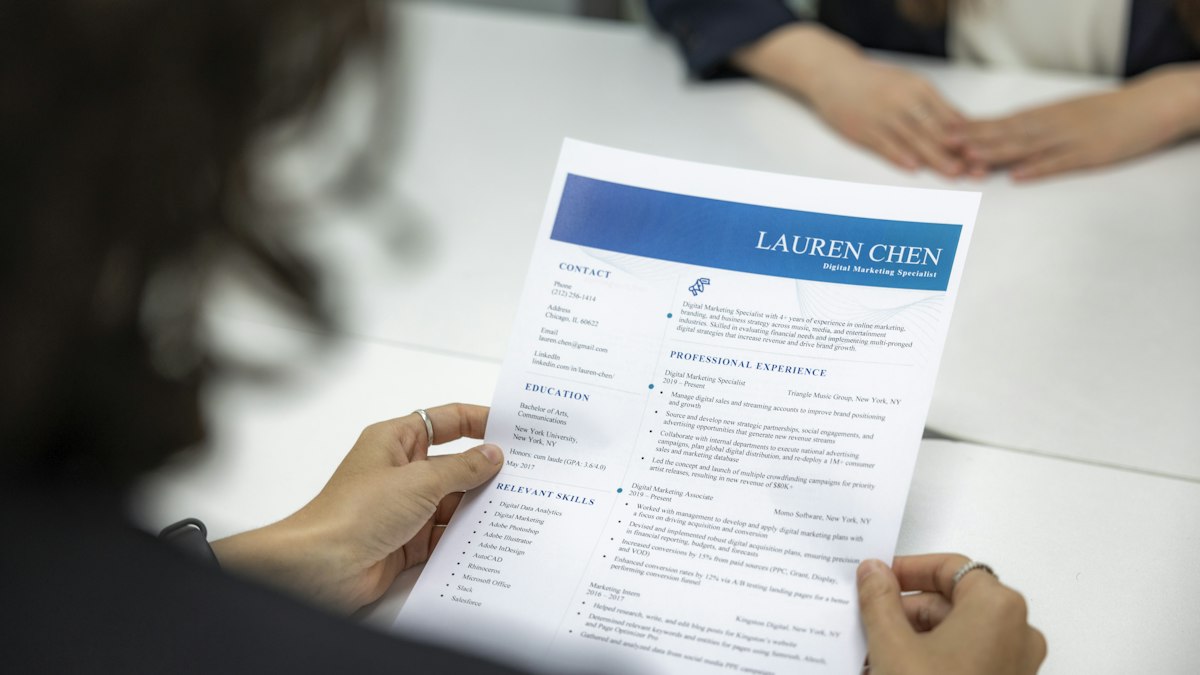
In short
- Keep it clear and relevant - usually two pages, most recent experience first.
- Show achievements, not just duties - what you did, how, and the result.
- Tailor it for each job, using the job ad's language where it truly describes your experience.
- Use a simple layout so applicant tracking systems and AI screening tools can read it - standard headings, no tables, text boxes or text in images.
- Never invent or exaggerate. Employers check, and AI-polished claims you can't back up will show in the interview.
The structure
Australian resumes are usually two pages (three at most for long careers) and follow this order:
- Name and contact details: phone, email, suburb and state, LinkedIn. No need for your full address, date of birth or a photo.
- Career summary: three or four lines on who you are, your key strengths and what you’re looking for.
- Key skills: eight to twelve skills relevant to the job, including technical skills, tools and licences.
- Experience: most recent first. For each role: title, employer, dates (month and year), and three to six bullet points.
- Education and training: qualifications, short courses, licences and certifications.
- Optional: volunteering, professional memberships, languages.
- Referees: “Available on request” is fine; have them ready.
Show achievements, not just duties
Duties tell an employer what the job was. Achievements show what you did with it. Use a simple pattern: action + how + result.
| Instead of | Try |
|---|---|
| Responsible for customer service | Resolved an average of 40 customer queries a day, lifting our review rating from 4.1 to 4.7 |
| Managed social media | Grew Instagram enquiries 35% in six months with a weekly content plan |
| Did quotes and invoicing | Cut quote turnaround from three days to same-day by setting up quote templates |
Use numbers where you honestly can: money, time, volume, ratings, team size.
Tailor it for every job
- Read the job ad and highlight the key skills, experience and qualifications.
- Update your summary to match the role.
- Reorder your skills and bullet points so the most relevant come first.
- Use the employer’s language where it accurately describes your experience. If the ad says “stakeholder engagement” and you’ve done it, use those words.
- Cut what’s irrelevant to keep it focused.
Getting past applicant tracking systems and AI screening
Many employers and recruiters use applicant tracking systems (ATS), increasingly with AI features, to collect, parse and rank applications before a person reads them. These systems read your resume as text and look for relevant skills and experience. To make sure they read yours correctly:
Formatting - Use a simple, single-column layout. Avoid tables, text boxes, columns, headers and footers for important information, and graphics or icons. - Use standard headings: “Experience”, “Education”, “Skills”. - Stick to common fonts (Arial, Calibri) at 10–12 point. - Put your contact details in the body of the document, not in the header. - Submit a Word document or text-based PDF, whichever the ad asks for. Never a scanned image or a picture of your resume. - Write dates consistently (for example “March 2022 – Present”).
Content - Include the key terms from the job ad where they genuinely apply, such as software names, licences, qualifications and job titles. - Spell out and abbreviate important terms at least once: “Certificate IV in Workplace Health and Safety (WHS)”. - Use standard job titles, adding the common equivalent if yours was unusual: “Customer Happiness Lead (Customer Service Team Leader)”. - Don’t hide keywords in white text or stuff them in lists. Systems and recruiters spot it, and it looks dishonest.
Remember a person still makes the decision. A resume written only for software will fall flat with the hiring manager.
The cover letter
Keep it to one page:
- Opening: the role you’re applying for and one line on why you’re a strong fit.
- Middle: two or three examples that match the job’s key requirements.
- Why them: what attracts you to this employer.
- Close: your availability and a thank you.
Address it to a person if you can find a name.
Common mistakes
- Spelling and grammar errors. Read it aloud, and ask someone else to check.
- A generic resume sent for every job.
- Long paragraphs instead of short bullet points.
- Unexplained gaps. A short line (“Career break: caring for family”) is fine.
- An unprofessional email address.
- Inventing or inflating experience.